


Private campuses now compete on far more than classroom results. Families and students also look at mental health support, recreation spaces, accessible facilities and a strong sense of community. Delivering that experience requires careful financial planning, especially when tuition income must cover staffing, maintenance and long-term investment.
Fiscal health gives campus leaders room to improve daily life without creating unstable costs. Clear priorities, realistic forecasts and regular reviews help institutions protect both the student experience and their educational mission.
The Rise of Holistic Campus Living
Modern campus life connects academic progress with physical health, social belonging and emotional support. Guidance on inclusive wellness design shows how thoughtful spaces can serve students with different needs. Quiet rooms, accessible paths and flexible gathering areas are practical examples.

Schools should start by asking students and staff which improvements would have the greatest daily impact. A survey may show that longer counseling hours matter more than a new fitness studio, for example. Research into whole-person student wellness also supports connecting well-being services with personal development. This evidence helps leaders direct limited funds toward facilities and programs people will actually use.
Funding Modern Wellness Facilities
A new wellness center carries costs beyond construction. Furniture, technology, utilities, cleaning and specialist staff all affect the long-term budget. Before approving a project, decision-makers should estimate its full cost across at least five years and include an allowance for repairs and price increases.
Phased investment can make an ambitious plan more manageable. A campus might first convert an underused room into a flexible exercise and support space, then expand once participation data confirms demand. Leaders can also schedule major work during planned building upgrades, reducing disruption and avoiding duplicate labor costs.
Every proposal needs measurable targets. These could include weekly attendance, appointment waiting times or student satisfaction scores. Reviewing those figures after six and 12 months shows whether the investment is producing useful results.
Navigating Structural Operational Costs
Campus budgets face expenses that are easy to underestimate. Older buildings may need frequent repairs while newer facilities can raise energy, software and maintenance charges. Staffing costs also continue after a project opens, even if enrollment changes.
Create a rolling cash-flow forecast that tracks tuition income, payroll, utilities, insurance and planned capital work. Leaders should test several scenarios, including a small enrollment decline or an urgent building repair. This reveals how much reserve funding the institution may need.
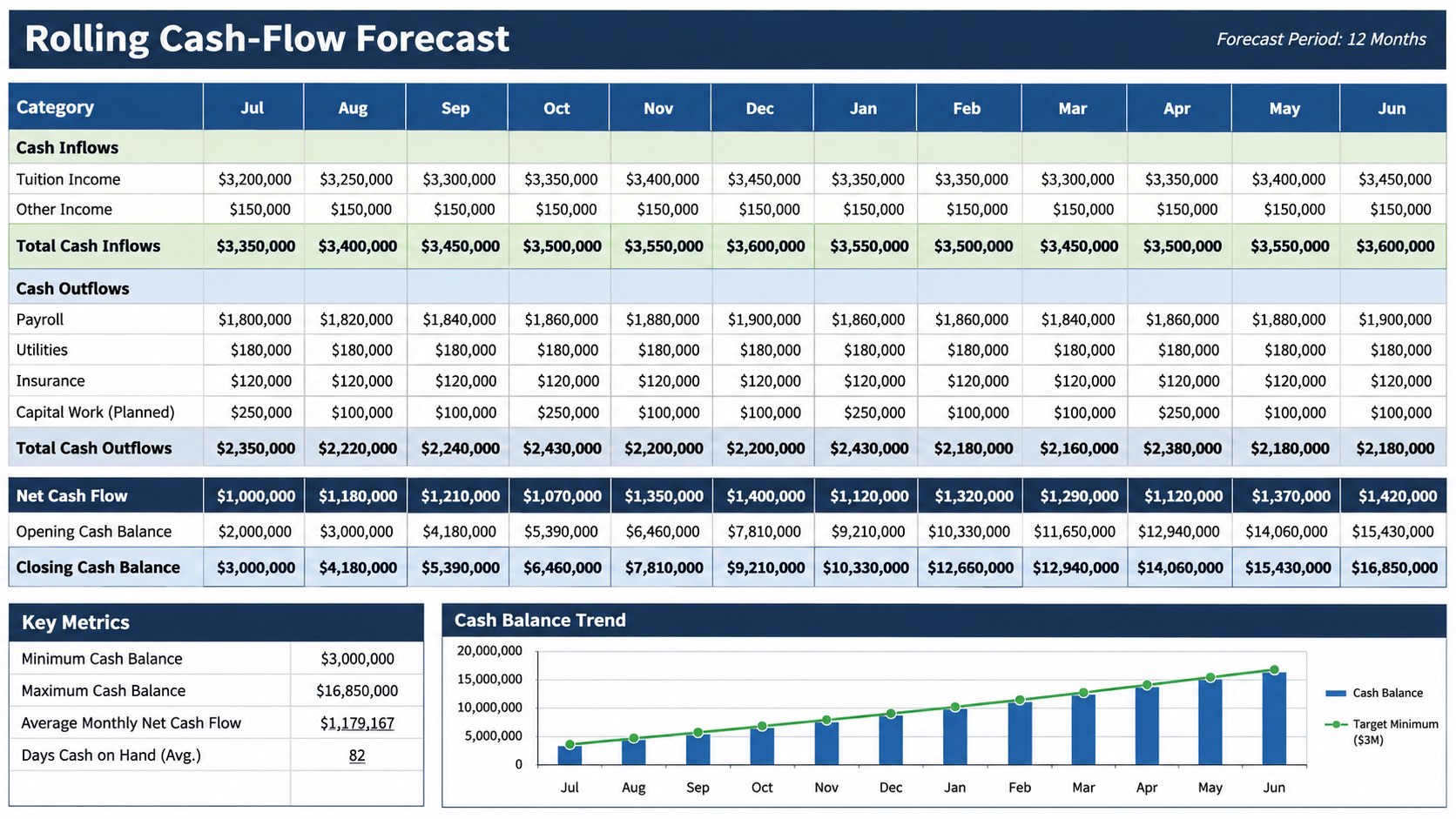
For UK institutions, independent school accountants can support bursars, governors and headteachers with audits, financial reporting, tax services and long-term planning. Outside advice can be especially useful before approving a major facility, restructuring fees or updating governance controls.
Preserving Educational Value for Families
Families judge value through teaching quality, student support, campus condition and the clarity of school fees. Sudden increases can weaken trust, so institutions should explain which costs are changing and how spending supports students. A simple annual breakdown can show the share allocated to instruction, facilities, support services and reserves.

Affordability policies also need regular review. Financial aid budgets should reflect current family circumstances and enrollment goals, while payment schedules can reduce short-term pressure without cutting revenue. The wider principle that financial health matters too applies to institutions as well as households.
Fiscal discipline protects educational choice. When leaders track lifetime project costs and connect spending to clear student outcomes, they can improve the campus without allowing optional enhancements to crowd out teachers, learning resources or family support.
A well-run private campus treats every new facility as a long-term commitment. Before construction begins, its leaders should know who will use it, what it will cost each year and which educational priorities the budget must continue to protect.