


In honor of Women’s History Month and International Women’s Day, we’re shining a light on the women doing the critical, life-saving work that doesn’t always make headlines.
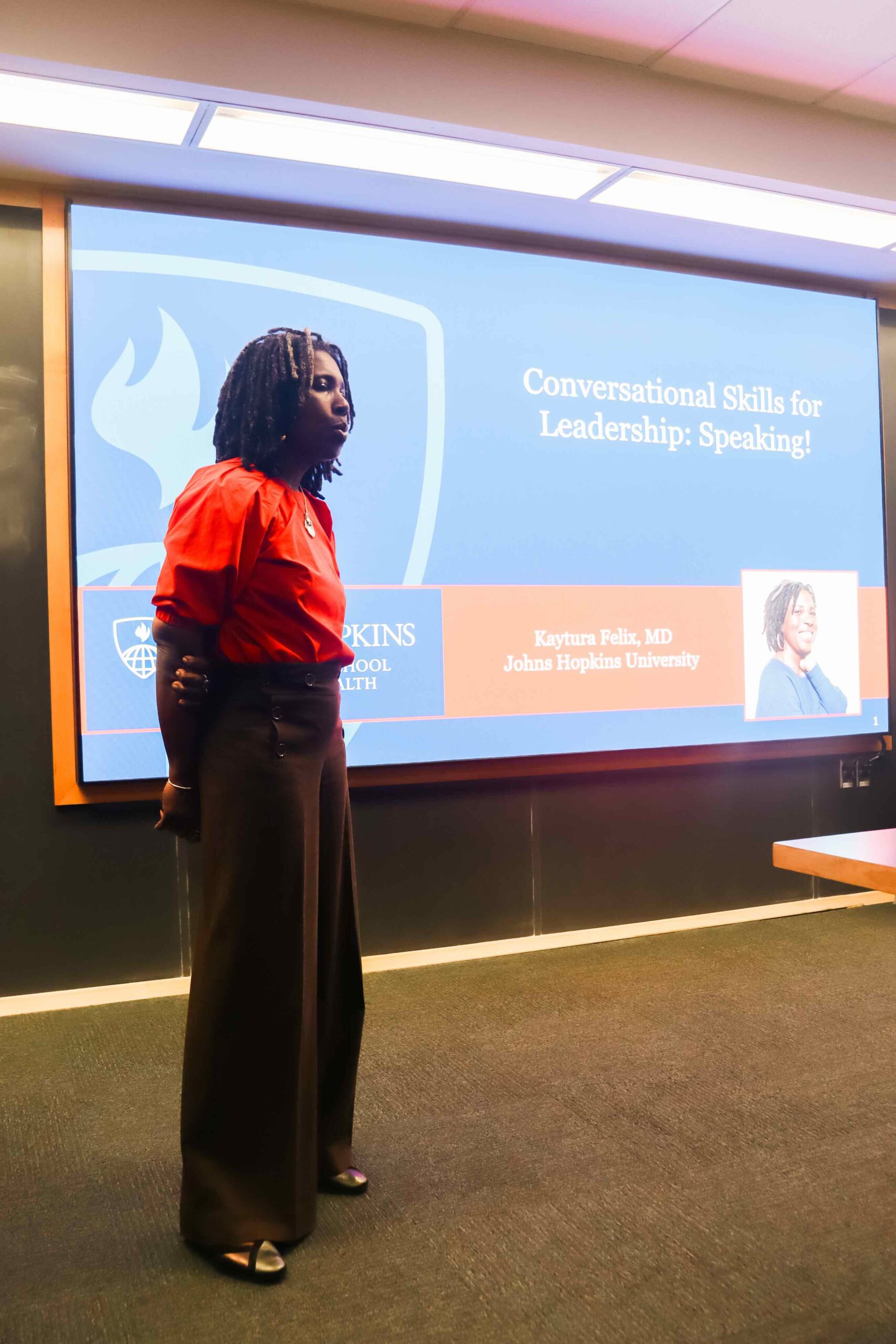
Dr. Kaytura Felix is not just a scholar, she’s a force. As a nationally respected health justice expert and Distinguished Scholar at the Johns Hopkins Bloomberg School of Public Health, Dr. Felix has dedicated her career to addressing one of the most urgent and heartbreaking public health crises in America: Black maternal mortality.
The statistics are staggering and unacceptable. Black women in the United States experience maternal mortality rates of 50.3 deaths per 100,000 live births — more than three times the rate for white women. These disparities persist across all income and education levels, meaning even highly educated, financially secure Black women are not immune to the systemic risks embedded in our healthcare system.
The recent death of Dr. Janell Green Smith, a Black midwife and maternal health advocate who tragically died from childbirth complications, has reignited urgent national attention on this crisis. Her death is a devastating reminder that even expert providers are not protected from the systemic failures that put Black mothers at risk.
But Dr. Felix’s work is about more than the crisis, it’s about the solutions.
Shifting the Narrative: From Crisis to Community-Led Solutions
“There’s more to this health crisis than negative statistics,” Dr. Felix says. “I want to make clear that there are solutions, too. The negative statistics always get so much attention, while the other side doesn’t. There is an active community working to make Black birth safe and to ensure that Black birthing people have good pregnancy and birth experiences.”
Through Black Birthing Futures, an asset-based research initiative she founded, Dr. Felix is documenting how Black community midwives are improving maternal outcomes through culturally aligned, relationship-centered care that treats birth as sacred, communal, and joyful — not just a medical event to survive.

Her research highlights real, working models of care that prioritize dignity, trust, and holistic support. And the results speak for themselves. When care is community-rooted, person-centered, and led by providers who understand the lived experiences of Black families, outcomes improve.
Why This Work Matters Right Now
At a time when maternal health disparities remain stubbornly persistent, Dr. Felix’s work offers a roadmap forward. She’s not just studying the problem — she’s elevating the voices of Black midwives, doulas, lactation consultants, and birth workers who have been doing this life-saving work for decades, often with little recognition or institutional support.
“I shadowed midwives and saw high-quality prenatal and postpartum care,” she shares. “The care, love, and sacredness these midwives bring to birth were so transformative. I didn’t even know someone could give and receive care like that. But there I was, watching these midwives prove that deep care was indeed possible.”
Dr. Felix is also informing critical policy discussions around Medicaid coverage for midwifery services, funding for community birth centers, and the urgent need for paid parental leave — changes that could fundamentally reshape maternal health outcomes in this country.
What Change Looks Like
When asked what she’d like to see in the next five years, Dr. Felix’s vision is clear: more investment in community birth workers, more birth centers across the U.S., collaborative care between doctors and midwives, insurance coverage for midwifery care, and at least six months of paid parental leave.
“Postpartum is an extremely critical period, physically and mentally, for new parents and their families,” she says. “Parents need that time to build a good foundation for their children. I didn’t have this, but I want it for this generation.”
Coming Soon: The Deep Care Podcast
Dr. Felix is paving the way towards this change. This April, she will launch the Deep Care Podcast, distributed by PRX and supported by the Robert Wood Johnson Foundation, the Wagner Foundation, and Birth Center Equity. The podcast will capture the stories of the midwives, mothers, and community leaders she’s met through her research — sharing their voices, their work, and their vision for a future where Black birth is safe, supported, and celebrated.
Honoring Women Leading Change
This Women’s History Month and International Women’s Day, let’s celebrate the women like Dr. Kaytura Felix who are doing the hard, necessary, transformative work to save lives and restore dignity to one of the most sacred experiences we have as humans: birth.
Her work reminds us that change is possible — not just through policy alone, but through community, care, and the fierce leadership of women who refuse to accept the status quo.
To learn more about Dr. Felix’s work, visit Black Birthing Futures and stay tuned for the launch of the Deep Care Podcast this April.
Black women deserve better. And thanks to leaders like Dr. Kaytura Felix, a better future is not just possible — it’s already being built.